
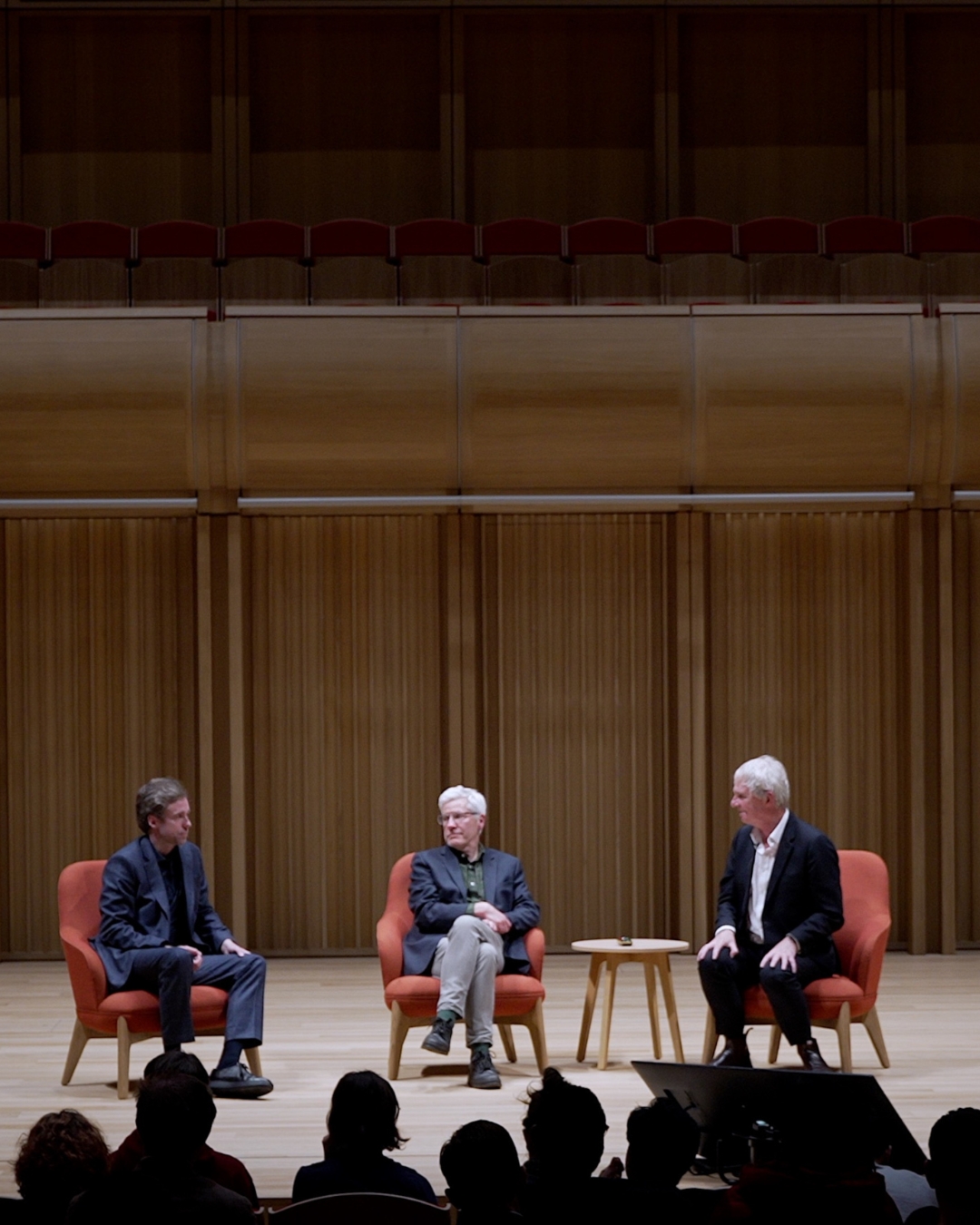
Professor Philipp Koralus, McCord Professor of Philosophy and AI and Founding Director of HAI Lab, part of the Institute for Ethics in AI, delivered a keynote address at the University’s Vice-Chancellor’s Colloquium on 28 January, reflecting on how rapid advances in artificial intelligence are reshaping intellectual inquiry and human decision-making.
Drawing on Thomas Kuhn’s notion of paradigm shifts, Professor Koralus argued that contemporary AI represents more than incremental progress. Instead, it is transforming the kinds of questions researchers ask, particularly about intelligence, justification, and agency. Modern AI systems, he suggested, have become increasingly independent of traditional foundations in logic, probability theory, and cognitive science. While these disciplines remain valuable, they no longer serve as the primary basis for building large-scale AI systems, raising new explanatory challenges about how to understand artificial intelligence itself.
Professor Koralus also highlighted a reversal in the relationship between justification and automation. AI systems are now capable of supporting rigorous reasoning in domains such as mathematics and philosophy, assisting users in clarifying arguments and exploring alternatives despite lacking internal guarantees of justification.
Turning to the future, Professor Koralus identified a central emerging dilemma: balancing enhanced human agency with the preservation of autonomy. While AI tools can significantly increase effectiveness and productivity, growing reliance on them, particularly at higher levels of judgement, risks eroding the extent to which decisions genuinely remain one’s own.
In response, he proposed the idea of autonomy-preserving intelligence augmentation, drawing on philosophical models of inquiry in which one intelligence can influence another without undermining autonomy. He concluded by inviting colleagues from across the University to engage with these questions through the Philosophy, AI, and Innovation seminar, held each Trinity Term, which brings together philosophers and technologists to explore the responsible development of AI systems. More information about the seminar will be published in the coming weeks.