
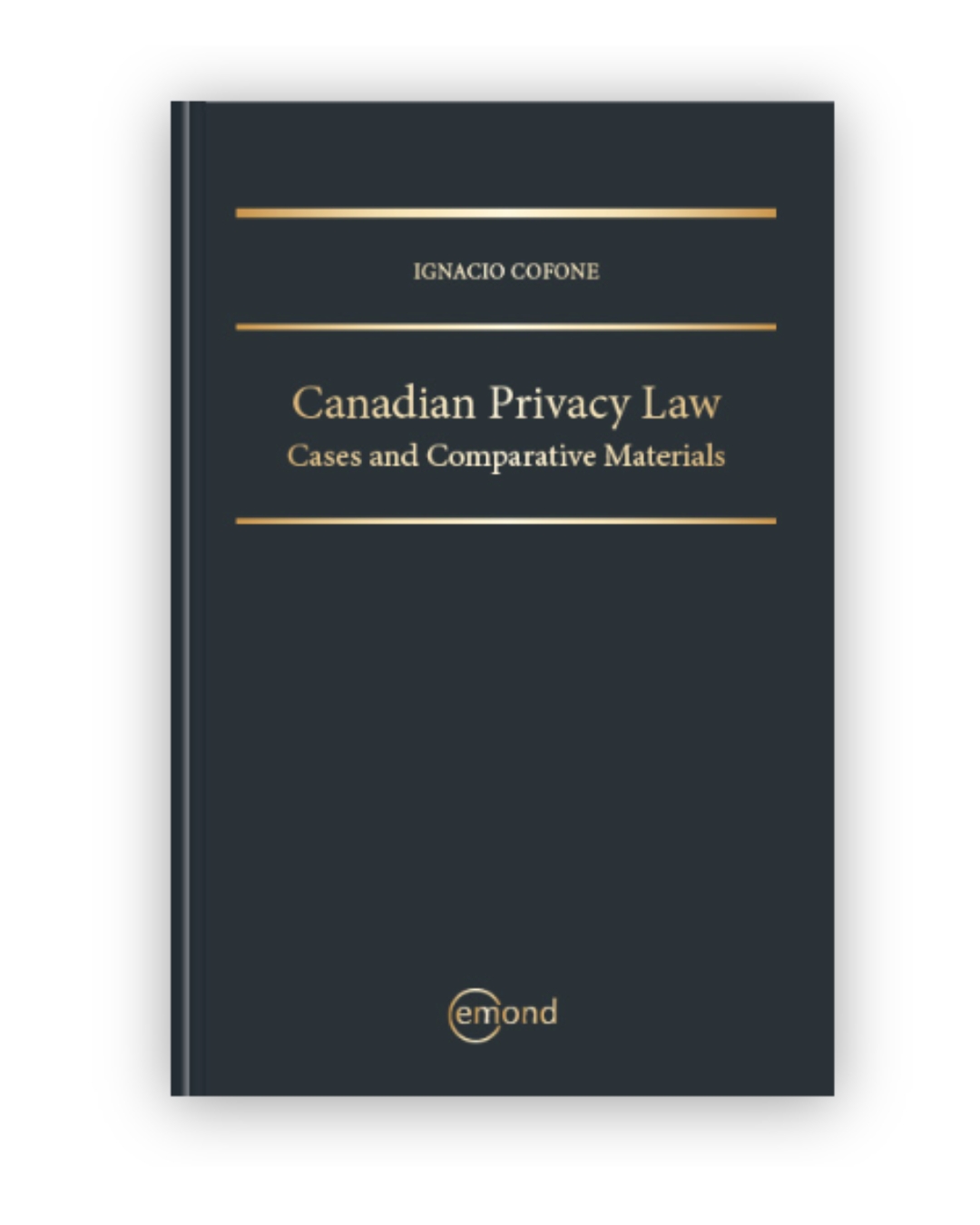
Professor Ignacio Cofone has published a new casebook, Canadian Privacy Law: Cases and Comparative Materials, offering a comprehensive and integrated approach to a field that has traditionally been taught in fragments.
Privacy law in Canada is often divided across tort, statutory, and constitutional frameworks, making it difficult for students and practitioners to understand how these areas interact in practice. This new casebook addresses that gap by bringing these strands together into a single, cohesive resource that highlights the common principles and challenges running across the field.
Developed over six years of teaching Privacy Law at McGill University, the book is designed to support instructors, students, and legal practitioners alike. It provides a ready-to-teach structure for courses, a clear and accessible framework for learners, and practical insight for lawyers navigating privacy issues that increasingly span domains such as employment, technology, and public law.
At a time when privacy concerns are intensifying—driven by developments in big data, artificial intelligence, algorithmic decision-making, and the Internet of Things—the need for a nuanced understanding of privacy law has never been greater. This casebook responds directly to that need.
Organised into four parts—Privacy Torts for Digital Harms, Statutory Privacy in the Information Economy, Privacy in Law Enforcement, and Special Topics—the book covers a wide range of contemporary issues, including online harms, the right to be forgotten, AI regulation, digital searches, health data, and mass surveillance. Through carefully edited cases, notes, and comparative materials, it equips readers to engage critically with the legal, ethical, and technological dimensions of privacy in the 21st century.
As the first Canadian casebook to integrate private law, statutory regimes, and Charter protections in one volume, Canadian Privacy Law: Cases and Comparative Materials represents a significant contribution to legal education and practice.