
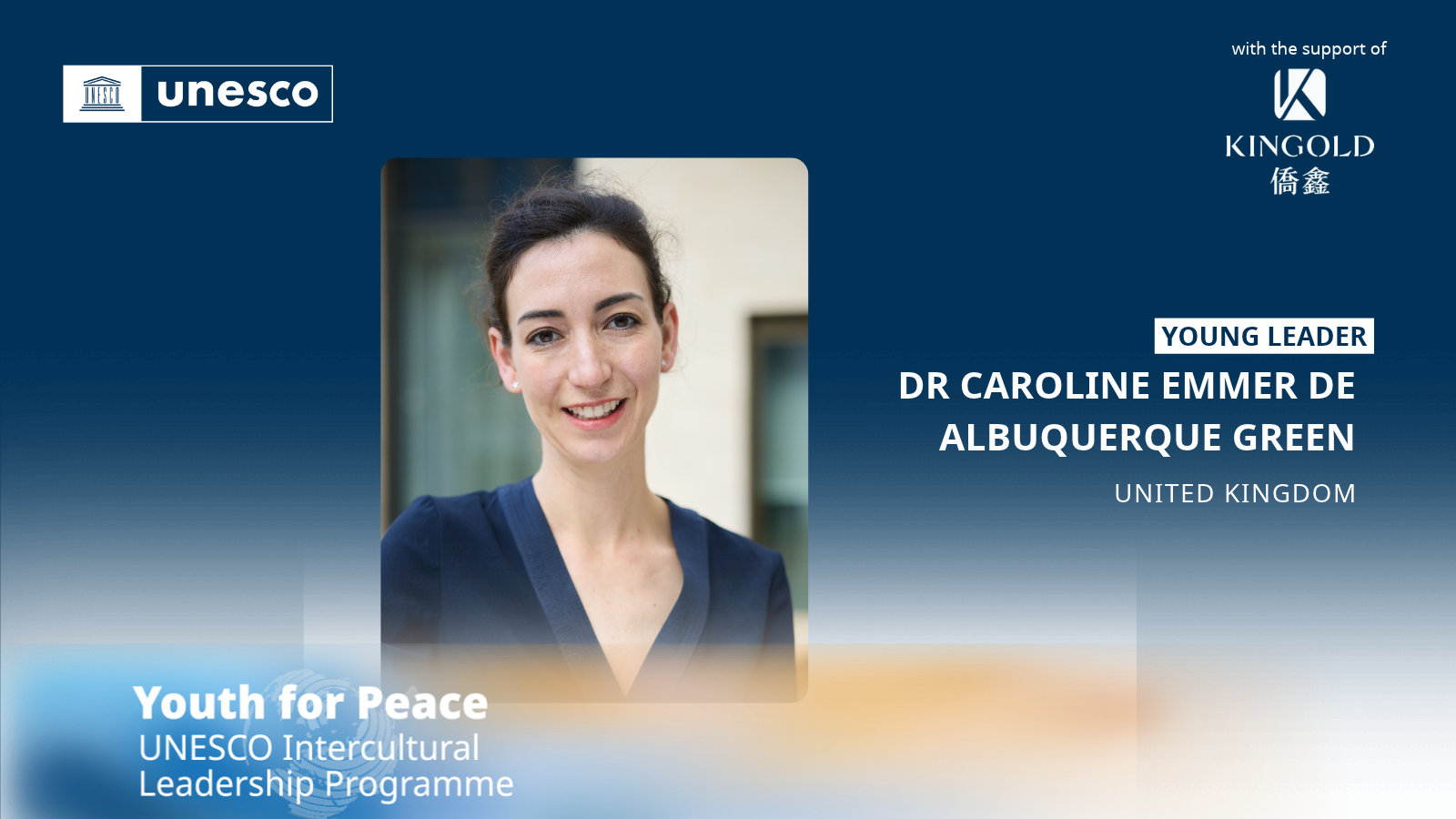
We are delighted to announce that our Director of Research, Dr Caroline Emmer De Albuquerque Green, is among 50 emerging leaders from around the world taking part in the 2026–2027 Youth for Peace: UNESCO Intercultural Leadership Programme.
Selected from a pool of 6,786 applicants across the globe, the 50 participants represent 38 countries and bring expertise spanning research, academia, policymaking, civil society and technology. The programme connects emerging leaders committed to fostering intercultural dialogue and strengthening social cohesion as they address some of our world’s most pressing challenges.
This year's programme, themed around human connection and dialogue in the age of artificial intelligence, explores how intercultural understanding can help societies navigate the opportunities and challenges presented by AI.
As part of the programme, Dr Green will explore intercultural understandings of caregiving and artificial intelligence, examining how AI technologies can support rather than undermine caregiving relationships across diverse cultural and community contexts.
Reflecting on her selection, Dr Green said:
'I am very excited to have joined this year's cohort of UNESCO's Youth for Peace Intercultural Leadership Programme together with 49 other young leaders from around the world. Our projects revolve around the question how we can strengthen human connection in the age of artificial intelligence and foster intercultural dialogue and inclusion. I am looking forward to learning from my colleagues and the Youth for Peace Team over the next year.'
The programme offers participants opportunities to collaborate with an international network of emerging leaders, engage with experts and translate their ideas into practical initiatives. Following project approval, participants are eligible to receive $10,000 in funding to implement their projects. The programme will then culminate in a Global Youth Dialogue for Peace in Guangzhou, China, where participants will share their experiences and insights with policymakers.
Find out more: UNESCO's announcement of the 2026–2027 cohort.