
Should AI be paternalistic? Might paternalistic AI save lives? Learn more at this insightful seminar, delivered by Cass R. Sunstein.
Abstract
Should AI be paternalistic? Might paternalistic AI save lives? Over the last four decades, there has been an outpouring of work on human error and on the role and nature of "cognitive biases." When human choosers can and should learn, and can and should exercise their own agency, paternalistic AI loses much of its appeal. But when many human choosers blunder, the argument for paternalistic AI is greatly strengthened. We can now specify the circumstances in which paternalistic AI is a great idea, or instead a horrifying one.
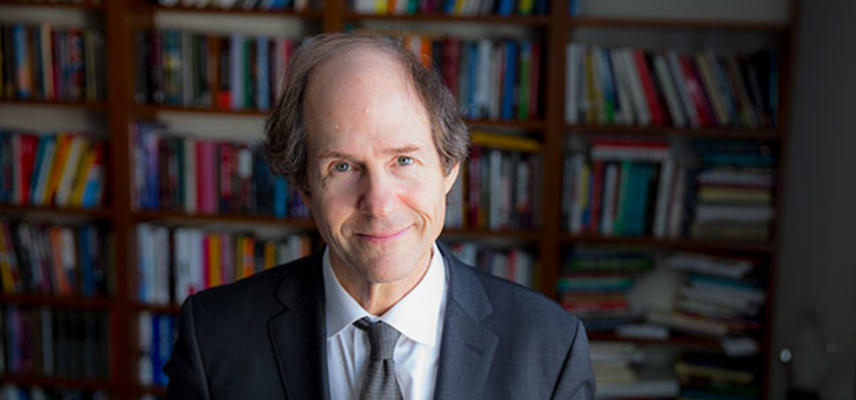
Professor Cass R. Sunstein is currently the Robert Walmsley University Professor at Harvard. He is the founder and director of the Program on Behavioral Economics and Public Policy at Harvard Law School. In 2018, he received the Holberg Prize from the government of Norway, sometimes described as the equivalent of the Nobel Prize for law and the humanities. In 2020, the World Health Organization appointed him as Chair of its technical advisory group on Behavioural Insights and Sciences for Health. From 2009 to 2012, he was Administrator of the White House Office of Information and Regulatory Affairs, and after that, he served on the President’s Review Board on Intelligence and Communications Technologies and on the Pentagon’s Defense Innovation Board. Mr. Sunstein has testified before congressional committees on many subjects, and he has advised officials at the United Nations, the European Commission, the World Bank, and many nations on issues of law and public policy. He has served as an adviser to the Behavioural Insights Team in the United Kingdom.
Mr. Sunstein is author of hundreds of articles and dozens of books, including Nudge: Improving Decisions about Health, Wealth, and Happiness (with Richard H. Thaler, 2008), Simpler: The Future of Government (2013), The Ethics of Influence (2015), #Republic (2017), Impeachment: A Citizen’s Guide (2017), The Cost-Benefit Revolution (2018), On Freedom (2019), Conformity (2019), How Change Happens (2019), and Too Much Information (2020). He is now working on a variety of projects involving the regulatory state, “sludge” (defined to include paperwork and similar burdens), fake news, and freedom of speech.
He served as Senior Counselor to the Secretary of Homeland Security during the Biden Administration, where he focused on resilience against weather-related risks (such as flooding and extreme heat) and on reduction of administration burdens; he was awarded the Distinguished Public Service Medal, the Department’s highest civilian honor, in 2024.
[Image credit: Rose Lincoln]