

Title:
Power diffusion through pluralism: The case for decentralized AI
Abstract:
Suppose Dario Amodei's "country of geniuses in a data center" materializes and millions of powerful AI are introduced to human society and become deeply embedded in our lives: advising us, mediating our access to information and services, and acting on our behalf. Should these systems be roughly homogeneous, trained according to substantially similar alignment decisions, sharing similar values and behavioral constraints, and controlled by a single or small number of actors? Or should they be pluralistic, developed and deployed by a wide range of actors including companies, governments, communities, and individuals, shaped by differing normative commitments, and answerable to no single authority? This talk makes a case for pluralism. The argument, in short, is that homogeneity concentrates objectionable power in the hands of the few actors who develop and deploy the dominant systems. Pluralism diffuses this power, transforming developers into entities of more limited, contestable influence whose residual power can be rendered legitimate through the genuine consent of their users. I call this the argument from power diffusion. I argue that it supports a strong presumption in favor of pluralism over homogeneity. I also argue that open and decentralized AI infrastructure is conducive to sustaining the kind of pluralism I defend.
12:30pm-1:30pm - Seminar
1:30pm-2:30pm - Networking Lunch (for those registered to attend in person)
In-person Venue: The Stephen A. Schwarzman Centre for the Humanities, Oxford, OX2 6GG
Remote: The connection link will be sent to registered attendees (usually the day before the event).
For more information about our events and other news, please subscribe to our mailing list.
Speaker:
Professor Christopher Howard

Chris Howard is an Associate Professor of Philosophy at McGill University and Director of McGill's Philosophy, Technology, and Policy Lab. His current work focuses on questions about power, legitimacy, and governance in digital infrastructure.
Hosted by:
Professor Ignacio Cofone
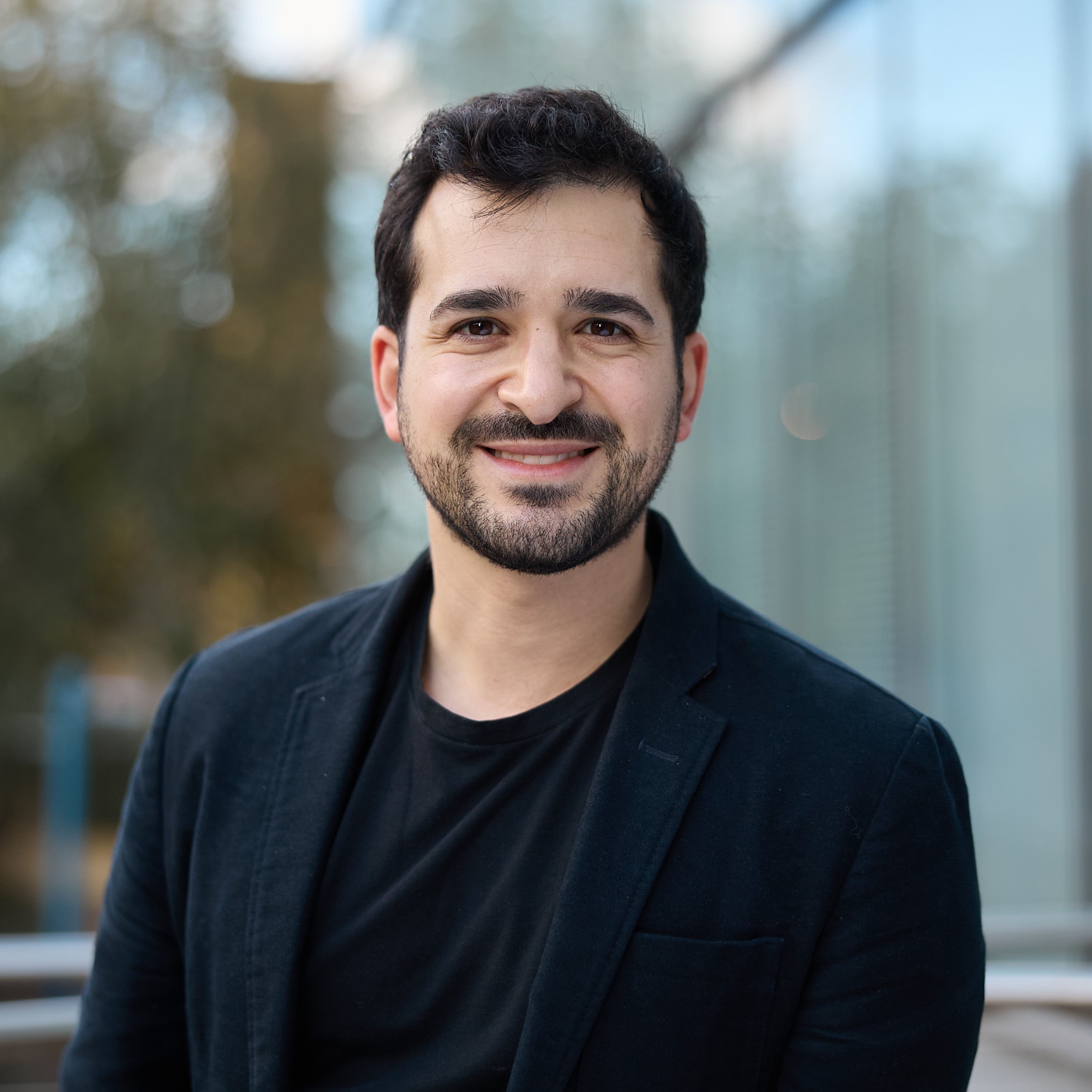
Ignacio Cofone is Professor of Law and Regulation of AI at the Faculty of Law and the Institute for Ethics in AI. His work examines how the law can and should adapt to AI-driven social and economic changes. His current research projects focus on how to address nonmaterial AI harm and on regulatory design that fosters human-centered AI innovation.