
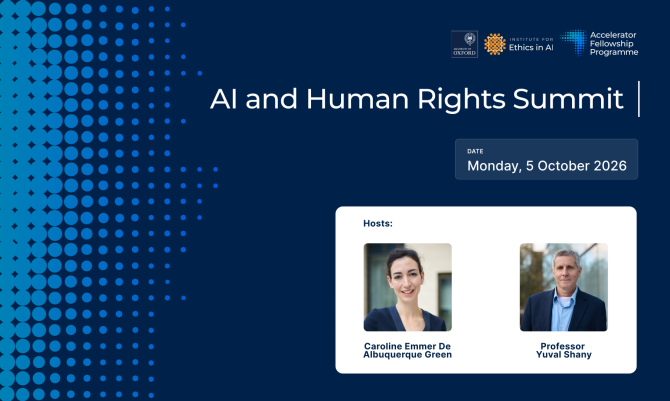
Registration for this event is closed.
The Summit will bring together academic experts, tech company representatives, public and private sector actors, civil society and members of policy making communities at both national and international levels, to introduce, demonstrate and co-develop a shared vision for embedding human rights standards into AI governance frameworks, including existing technology regulation and through regulation by design.
We aim to support, through this event, efforts to place human rights at the center of AI governance frameworks – alongside principles such as safety, ethics, responsibility, inclusiveness, impact and innovation.
These efforts are increasingly urgent in nature in light of the growing number of national legislative initiatives, ongoing debates over the effectiveness of AI self-regulation and the emergence of international fora.
The Summit builds on a consultation process undertaken by Professor Yuval Shany as part of his Accelerator Fellowship Programme – involving workshop sessions in Oxford, Geneva, Harvard and Pretoria – and on a White Paper published by Professor Shany in late 2025 on the need and feasibility of an International AI Bill of Human Rights, which proposes ways to adapt existing human rights standards, so as to better address some of the unique challenges posed by AI systems and their uses.
Agenda
- 08:30 Registration opens
- 09:45 Welcome remarks:
Dr Caroline Emmer De Albuquerque Green (Director of Research, Institute for Ethics in AI),
Professor Edward Harcourt (Director, Institute for Ethics in AI),
Professor Yuval Shany (Senior Inaugural Fellow, AFP) - 10:00 Video address from Volker Türk, UN High Commissioner for Human Rights
- 10:45 Session 1: The International Human Rights Movement’s Response to the AI Challenge
Chair - Professor Yuval Shany (Institute for Ethics in AI),
Solomon Dersso (African Commission on Human and Peoples’ Rights) (remote),
Michael O'Flaherty (Commissioner for Human Rights, Council of Europe),
Changrok Soh (Chair, UN Human Rights Committee),
Wafa Ben Hassine (Office of the High Commissioner for Human Rights) - 12:00 Break
- 12:15 Session 2: Embedding Human Rights into AI Governance - a national perspective
Chair - Kate Jones (CEO Digital Regulation Cooperation Forum),
Isabella Ferrari (Brazilian National Council of Justice) (remote),
Suresh Venkatasubramanian, (Brown University),
Eileen Carter (South African Human Rights Commission),
Claris Ogangah (Kenyan National Human Rights Commissioner) (remote),
Lord Timothy Clement-Jones (House of Lords) - 13:30 Lunch
- 14:15 Session 3: Promoting Human Rights in AI Systems - A civil society perspective
Chair: Harriet Moynihan (Blavatnik School of Governance),
Rachel Adams (Global Center on AI governance),
Angela Müller (Algorithm Watch),
Barbora Bukovska (Article 19),
Thompson Chengeta (Liverpool John Moores University)
Philippa Webb (Oxford Institute of Technology and Justice) - 15:30 Break
- 15:45 Session 4: Human Rights and AI - An industry perspective
Chair - Dr Caroline Emmer De Albuquerque Green (Institute for Ethics in AI),
Miranda Sissons (Human Rights Policy, Meta),
Alexandria Walden (Human Rights Program, Google),
Michael Karimian (DIgital Diplomacy, Microsoft)
Dina Hussein (Product Policy, OpenAI) - 17:00 Closing session
Hosts
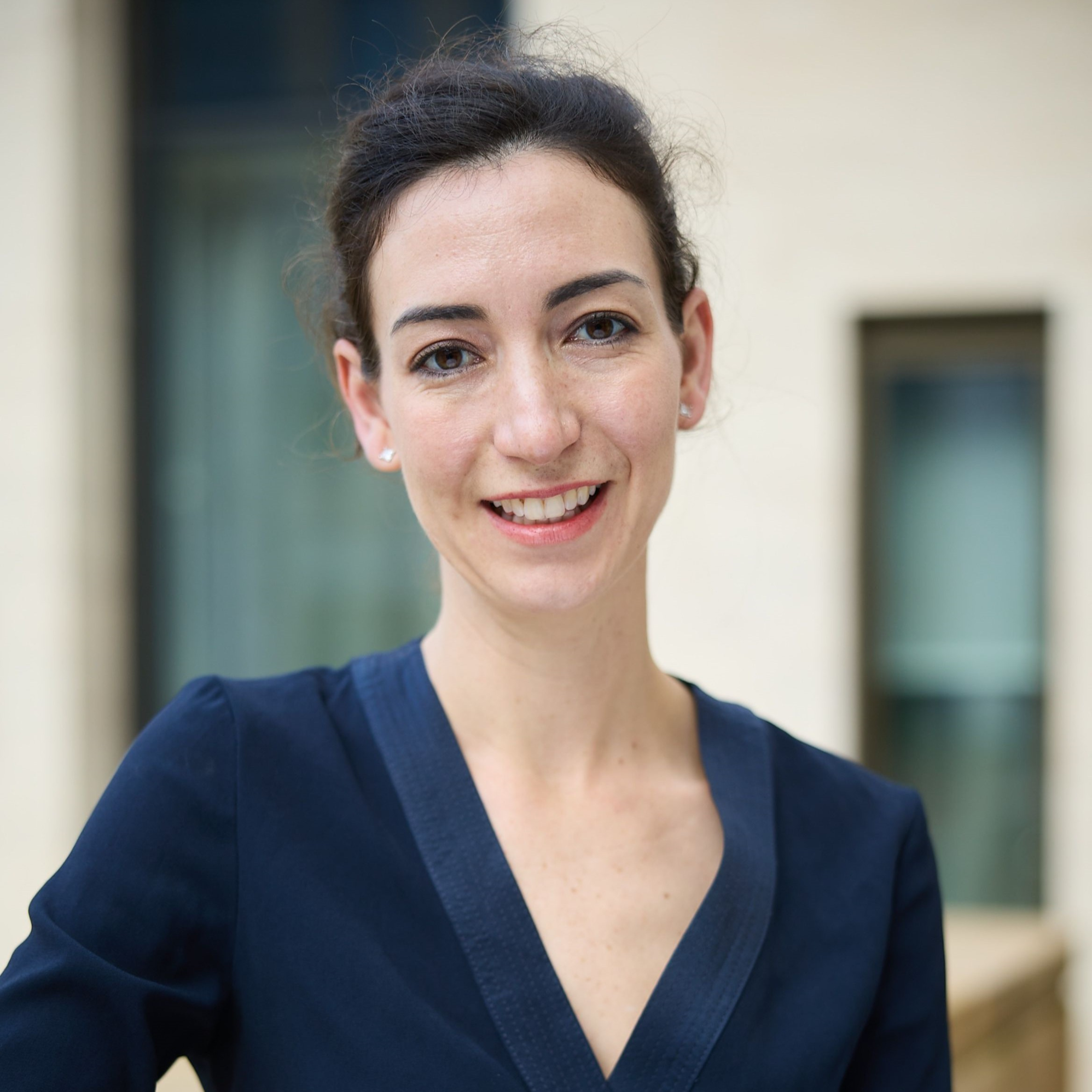
Dr Caroline Emmer De Albuquerque Green is the Institute’s Director of Research and Head of Public Engagement, leading the Institute's Accelerator Fellowship Programme. Caroline's research focuses on AI and human rights, specifically in the fields of health and social care. Caroline holds a LLB (Hons) from the University of Edinburgh, an MSc in Human Rights from the LSE, a MA in Investigative Journalism from City University and a PhD in Gerontology from King's College London.
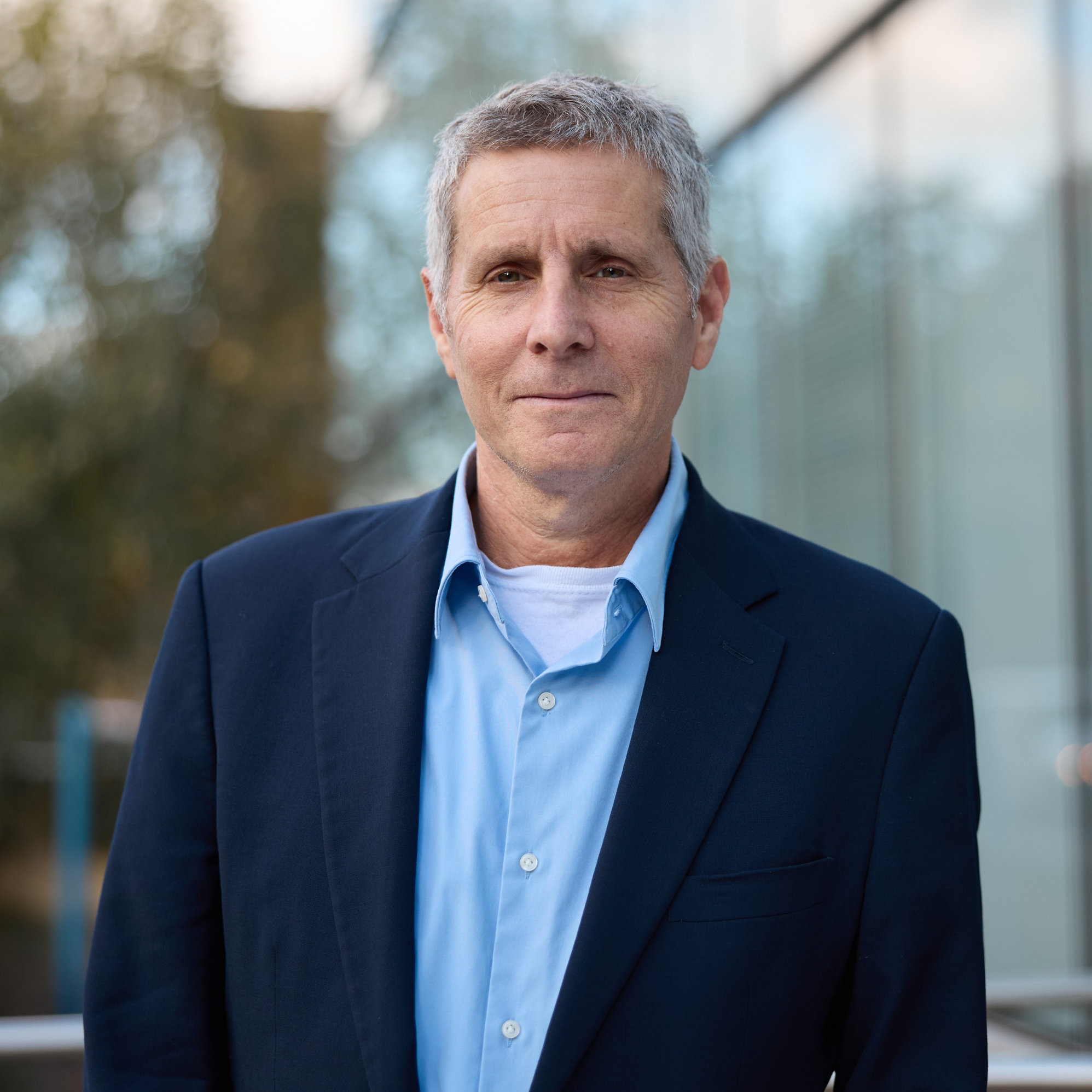
Professor Yuval Shany is the Hersch Lauterpacht Chair in International Law and former Dean of the Law Faculty of the Hebrew University of Jerusalem. He also serves as a Senior Research Fellow at the Israel Democracy Institute, and a Visiting Professor in the Center for Transnational Legal Studies (CTLS) at King’s College, London and the Graduate Institute of International Studies in Geneva. He was a member of the UN Human Rights Committee between 2013-2020 (chairing the Committee between 2018-2019). His current research focuses on international human rights law and new technology and he leads a European Research Council group or researchers investigating the three generation of digital human rights (3GDR).